Flexibility Meets Protection: Understanding Micro And Small-Sized Enterprises’ Wage Rules Under Indonesian Law
| | |

Flexibility Meets Protection: Understanding Micro And Small-Sized Enterprises’ Wage Rules Under Indonesian Law

The Indonesian labour framework provides flexibility for micro and small enterprises (“MSEs”) to pay wages below the provincial minimum wage (UMP). This exemption, introduced under the Job Creation Law and elaborated in Government Regulation No. 36 of 2021 as amended by Government Regulation No. 51 of 2023 (“GR on Wages”) on Wages, seeks to balance…


Minister of Law Regulation 27/2025: New Rules on Music Royalties and Key Differences from Minister of Law and Human Rights Regulation 9/2022 
| | |

Minister of Law Regulation 27/2025: New Rules on Music Royalties and Key Differences from Minister of Law and Human Rights Regulation 9/2022 

The issuance of MOLR 27/2025 introduces a new framework for managing music and/or song royalties in Indonesia, while simultaneously revoking MOLR 9/2022. Through this regulation, the government strengthens the LMKN’s role as the central management body, explicitly distinguishes between royalty obligations for analog and digital users, tightens the operational budget limits, and expands the audit…

Flexible Work, Rigid Law: Revisiting Working Hour Regulations in the Digital Age
| | |

Flexible Work, Rigid Law: Revisiting Working Hour Regulations in the Digital Age

As digital transformation drives the rise of remote and hybrid work, Indonesian labor law remains rooted in a rigid traditional framework. Companies remain bound by strict regulations on working hours, overtime, and employee rights, even when work is performed outside the office. This creates practical challenges in defining working hours, classifying workers, and balancing productivity…

Prohibition with Exceptions: An Overview of the Minister of Manpower’s Circular on Retaining Diplomas and Personal Documents
| | |

Prohibition with Exceptions: An Overview of the Minister of Manpower’s Circular on Retaining Diplomas and Personal Documents

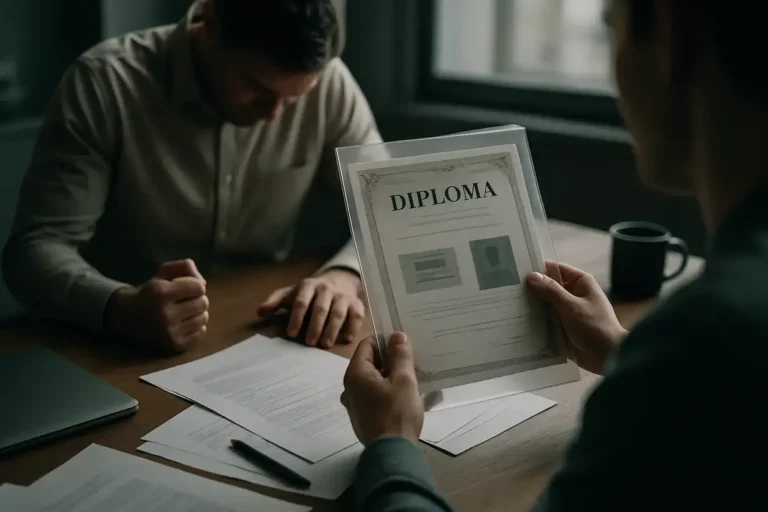
Overview  On May 20, 2025, the Indonesian Minister of Manpower issued Circular Letter No. M/5/HK.04.00/V/2025, prohibiting employers from retaining workers’ original diplomas or personal documents, except in limited cases, i.e., when such documents are issued through employer-funded training programs with strict safeguards in place. This policy aims to protect employee rights, promote fair labor practices,…

Franchise Policy Update: Local Governments Now Have the Authority to Issue STPW for Certain Franchisees
| | |

Franchise Policy Update: Local Governments Now Have the Authority to Issue STPW for Certain Franchisees

Under Minister of Trade Regulation Number 25 of 2025 on Procedures for Issuance of Franchise Registration Certificates by Local Governments (“MOTR 25/2025”), certain categories of Franchise Registration Certificate (Surat Tanda Pendaftaran Waralaba, “STPW”) are now issued by local governments. This regulation also reinforces and clarifies verification procedures, particularly regarding franchise agreements and the legal protection…

What Do the New Cooperation Schemes in MEMR 14/2025 Mean for Oil and Gas Stakeholders?
| | | | |

What Do the New Cooperation Schemes in MEMR 14/2025 Mean for Oil and Gas Stakeholders?

The Indonesian Government, through the enactment of the Minister of Energy and Mineral Resources Regulation Number 14 of 2025 concerning Cooperation in the Management of Parts of Working Areas for Enhancing Oil and Gas Production (“MEMR Regulation 14/2025”), introduces a new regulatory framework governing various forms of cooperation between Oil and Gas Contractors and other…

From Recruitment to Offboarding: Compliance Challenges under the Personal Data Protection Law
| | |

From Recruitment to Offboarding: Compliance Challenges under the Personal Data Protection Law

With the enactment of Law Number 27 of 2022 on Personal Data Protection (“PDP Law”), employers now face significant obligations to ensure lawful and transparent handling of employee data throughout the employment lifecycle, from recruitment to offboarding. As legal accountability grows, employers must move beyond surface-level approaches and adopt proactive, structured methods for data governance…

Between Trends and Compliance: Managing Intellectual Property Risks in Social Media Marketing
| | |

Between Trends and Compliance: Managing Intellectual Property Risks in Social Media Marketing

Despite its perceived free nature, the social media universe is not a lawless space. Content such as music, images, and visual elements remains protected by intellectual property (“IP”) rights, such as copyright and trademark laws. IP infringement can occur not only when an entire work is used without permission but also when even a small…

The Rise of Freelancers and Gig Workers: Are They Covered by Indonesian Labor Law?
| | |

The Rise of Freelancers and Gig Workers: Are They Covered by Indonesian Labor Law?

Overview  As Indonesia’s workforce embraces freelancing and gig-based jobs, legal questions arise over their employment status. This article examines whether freelancers and gig workers are protected under Indonesian labor law, focusing on the legal definition of employment, daily freelance work provisions, and the risks of misclassification. It highlights that labels like “freelancer” do not shield…

Company Regulations vs. Employment Agreements: Navigating Conflicts and Compliance
| | |

Company Regulations vs. Employment Agreements: Navigating Conflicts and Compliance

The interplay between employment agreements, company regulations, and collective labor agreements often creates legal uncertainty for employers in Indonesia. Understanding their hierarchy and applying the principle of favor laboris, which prioritizes provisions most favorable to employees, is essential to ensure compliance and prevent disputes. Practical tips such as harmonizing documents, monitoring legal changes, and seeking…